There’s a moment almost every host in Houston, Texas knows well, you’ve tidied the living room, prepared the guest bedroom, and started organizing the kitchen, only to step into the bathroom and realize it needs much more than a quick wipe-down. Guests notice the bathrooms. It’s one of the few spaces they’ll use privately, and whether they mention it or not, the cleanliness and condition of the room leave a lasting impression.
That’s exactly why bathroom deep cleaning deserves special attention before anyone arrives. A surface clean isn’t enough. What guests experience and what you want them to experience comes from a thorough, methodical cleaning that tackles hidden grime, sanitizes high-touch surfaces, and refreshes every corner of the space.
Table of Contents
ToggleBathroom Deep Cleaning Tips Every Host Should Know
The tips and tricks that you must adhere to and inculcate in your routine bathroom deep cleaning schedule are as follows:
- Start With a Quick Bathroom Assessment
Before you grab a single sponge, slow down for two minutes. Walk through the bathroom the way a guest would — someone who’s never been in there before and is quietly taking it all in.
What do you notice first? Is there fogging on the mirror? A ring around the faucet base? Does it smell a little stale when you open the door? These are your cues. You’re not being hypercritical; you’re being honest.
- Prioritize by Visibility and Touch
Not everything needs equal attention. The goal is to identify which surfaces guests will actually see and touch — and hit those hardest. A bathroom cleaning checklist helps here, even a mental one. Think in zones: the vanity and mirror, the toilet, the shower or tub, and the floor and baseboards. Work through each zone in order rather than jumping around.
This kind of focused approach is especially useful when you’re working with a tight window before guests arrive. Being strategic beats being frantic.
- Focus on the Surfaces Guests Notice First
The vanity area usually delivers the first impression. It’s what greets someone the moment they flip on the light.
Mirrors need to be genuinely streak-free, not just wiped. Use a microfiber cloth and a good glass cleaner, wiping in a circular motion before finishing with a dry pass. Bathroom lighting is unforgiving — it catches smudges and fingerprints that look invisible in other rooms.
Countertops almost always benefit from being cleared completely before cleaning. Pull everything off, wipe down the surface with a disinfecting cleaner, and then be selective about what goes back. An organized counter reads as clean even before you look closely at the surface itself.
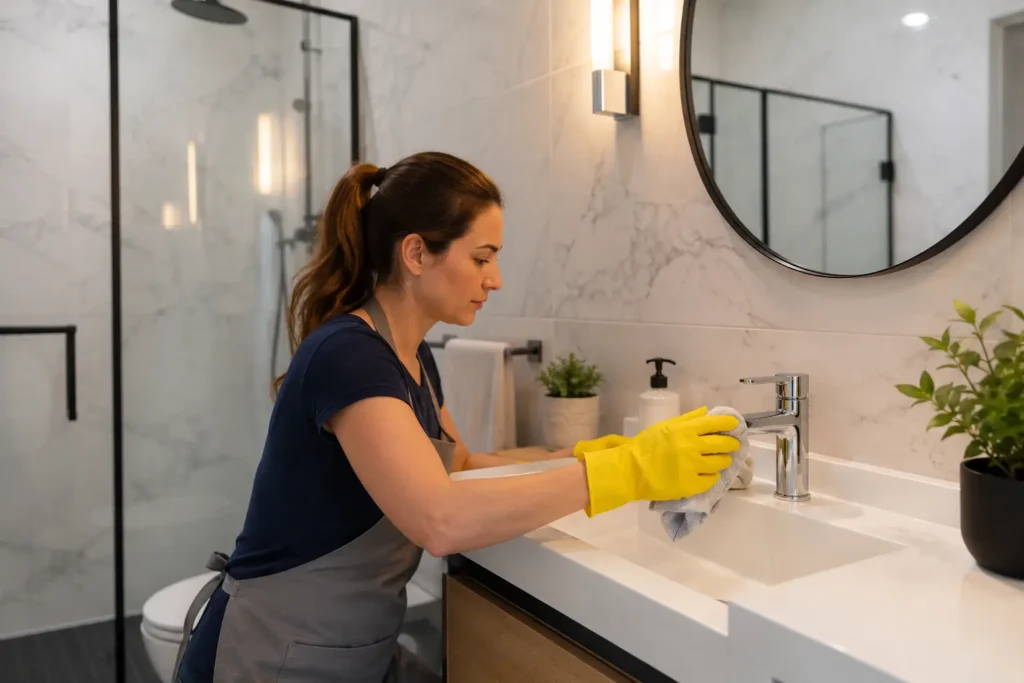
Sinks and faucets take a beating. Soap residue, water spots, and mineral deposits build up faster than most people realize. A paste of baking soda and a little dish soap handles most fixture buildup without scratching. For chrome, buff it dry after cleaning — that final step is what makes the difference between clean and polished.
It’s worth pausing on this: a gleaming faucet and a clutter-free counter do more for the overall impression than almost anything else in the room. They’re small details that quietly signal that someone actually took care of this space.
- Don’t Overlook the Toilet and Shower Areas
Toilet Cleaning That Goes Beyond the Bowl
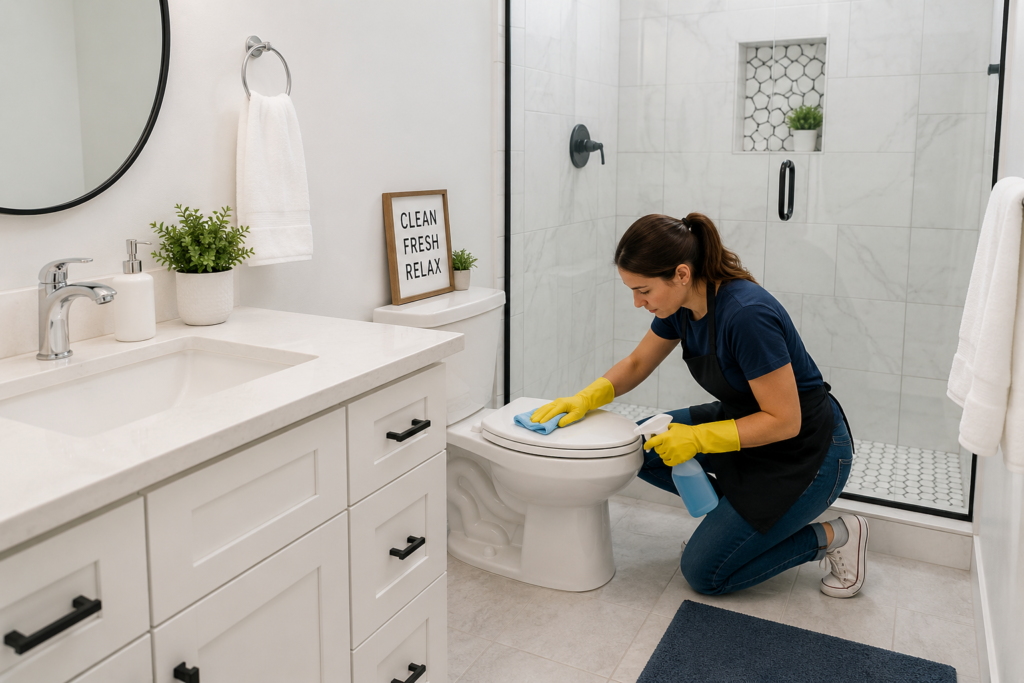
Most people clean the bowl and call it done. A proper bathroom sanitization covers every surface — the tank exterior, the base where it meets the floor, the flush handle, and the underside of the seat. These are the spots that get skipped during routine cleaning and the spots that guests are most likely to notice up close.
Apply a disinfecting cleaner and let it dwell before wiping. For the bowl itself, stubborn mineral staining responds well to a pumice stone — it sounds aggressive, but it won’t damage porcelain if used correctly.
Shower and Tub Deep Cleaning
Soap scum, mildew, and hard water deposits are the main culprits in shower and tub areas. The key is dwell time. Apply your cleaner, walk away for five to ten minutes, and then scrub. Trying to scrub immediately is working harder than you need to.
For grout, a stiff-bristled brush with a baking soda and hydrogen peroxide paste is genuinely effective. Work in small sections and rinse as you go. It takes time, but the visual payoff is real.
Odors often hide in the drain. A flush of baking soda and vinegar followed by hot water, clears the most common sources of that musty bathroom smell. Don’t skip this step — guests notice odors before they notice anything else.
If you’re facing significant buildup ahead of a major gathering, this is one area where a professional bathroom deep cleaning service earns its value. A trained team can restore shower tile and grout to a level that’s genuinely difficult to achieve on your own in a limited window.
- Address Hidden Dirt and Germ Hotspots
Here’s the honest truth about bathroom hygiene: a bathroom can look clean and still be far from it. The difference lies in the places that rarely get touched during regular cleaning.
Grout lines are a magnet for soap residue, moisture, and mold spores. They don’t look bad at first — they just gradually darken until one day you really look at them.
Baseboards collect dust, hair, and product overspray. A damp microfiber cloth takes less than two minutes and makes the floor area of the bathroom look significantly cleaner.
Light switches and door handles are touched constantly and almost never disinfected. One pass with a disinfecting wipe takes seconds and matters more than people think — especially during cold and flu season.
Exhaust fans are easy to forget because they’re overhead, but dust buildup restricts airflow and pushes particles back into the air. A quick vacuum of the grille is all it takes.
These aren’t glamorous tasks. But they’re what separate a bathroom that looks clean from one that genuinely is.
- Create a Fresh and Guest-Ready Environment
Cleaning sets the foundation. The finishing touches are what make a bathroom feel like it was prepared with intention.
Fresh towels do more work than most hosts give them credit for. A neatly folded hand towel — even just one — tells guests that someone thought about their visit. It doesn’t need to be fancy; it just needs to be clean and placed with care.
Ventilation matters more after cleaning than before it. Running the exhaust fan for at least 20 minutes after you finish reduces moisture and prevents that just-cleaned-but-somehow-still-damp smell.
Scent is personal, so keep it subtle. A reed diffuser or a very lightly scented candle is welcoming. Heavy fragrance in a small bathroom is the opposite — it can feel like something’s being covered up.
Organized storage is one of the easiest things to overlook. A small basket to corral personal items off the counter, or a quick drawer tidy, keeps the space looking intentional without requiring a major reorganization.
When Professional Help Makes Sense
For most guest preparations, a focused personal deep clean is entirely doable — especially if bathroom maintenance is already part of your regular routine.
But if you’re hosting a large holiday event, working with multiple bathrooms, or dealing with months of accumulated buildup, the workload can become genuinely unrealistic to handle alone in the time available. Homeowners in areas like Katy, Texas, where larger homes and frequent hosting go hand in hand, often rely on deep cleaning services in Katy before major gatherings, specifically because the scope of work calls for it.
Professional cleaning teams bring the right products for specific surfaces, the experience to spot problems that aren’t obvious, and the efficiency that comes with doing this work every day. For homes with natural stone, older tile, or grout that hasn’t been professionally cleaned in years, that expertise also protects your surfaces from well-intentioned but damaging DIY attempts.
It’s not about outsourcing the effort — it’s about recognizing when the situation calls for a different level of support.
Conclusion
A thorough bathroom deep cleaning before guests arrive isn’t just about appearances. It’s about creating a space that’s genuinely clean, hygienic, and comfortable — one that guests can use without a second thought.
Work through it methodically: start with an honest assessment, prioritize the surfaces that matter most, get into the hidden hotspots that routine cleaning misses, and finish with the small touches that make the space feel welcoming rather than just functional.
When the timeline is tight or the job is bigger than one afternoon can handle, a professional bathroom deep cleaning service is a smart call. Either way, the result is a bathroom your guests will notice — for exactly the right reasons.
FAQs
How to deep clean a bathroom checklist?
Bonus chores should be accomplished monthly. The bathroom deep cleaning checklist must include the following:
- If needed, clear the drains.
- Clean the toilet brush.
- Use a 50/50 vinegar/hot water mix to soak your showerhead overnight.
- Ensure your medicine cupboard is tidy and clean, and dispose of anything that has expired.
- Verify that the hand soap has been replenished.
- Wash the towels in the bathroom.
How to quickly clean & tidy before a guest comes?
We’ve compiled the top 8 MUST DO housekeeping tasks to finish before visitors arrive to assist you:
- Ensure your toilet is clean.
- Ensure your bathroom is clean.
- Organize your refrigerator.
- Swap out your linen.
- Unclean cups and glasses.
- Keep it fresh for your pet.
- Put your garbage away.
- Webs of spiders.
What is the 20 10 rule in cleaning?
The 20/10 rule is a time-management technique in which you must take a 10-minute break after cleaning or decluttering for 20 minutes. It was made popular by Unf*ck Your Habitat organizer Rachel Hoffman and helps avoid burnout and make difficult tasks seem more doable.
What are the 7 steps of housekeeping?
The 7 steps of housekeeping frequently used in professional settings include the following:
- hospitality to ensure consistent, efficient, and hygienic cleaning.
- follow a strict “top-to-bottom, clean-to-dirty” flow.
This systematic sequence helps staff safely manage trash, strip linens, dust, sanitize, and prepare a room for the next use.
What is ABCD in housekeeping?
“ABCD” is a popular memory aid and training structure used in professional housekeeping to guarantee consistent, excellent room cleaning. The basic architecture represents Away/Air, Bed preparation, Chemical or Cleaning, and Dusting, while various training programs and facilities may modify the precise letters.